
The LEF Foundation has awarded 12 Moving Image Fund grants totaling $47,500 in support of feature-length documentary works by New England-based filmmakers.
The LEF Moving Image Fund invests in feature-length documentary films that demonstrate excellence in technique, a resonant story or idea, and originality of artistic vision and voice. The most recent round of awards includes seven grants of $5,000 to projects at the Pre-production stage and five grants of $2,500 to projects at the Early Development stage.
This year’s granted projects reach toward, expose and wrestle with realities that unite and divide us, asking how a point of rupture might connect us or keep us apart, leading to inspiring acts of remembrance or creation. Whether reopening histories of exclusion, delving into our enmeshment with the natural world at a time of ecological collapse, or imagining deeply embodied rituals and devotional practice, these films engage a rich variety of formal traditions and experiments to bring to light a multitude of experiences through nonfiction cinema.
PRE-PRODUCTION
Meet Me at the Court
Directed by Evan Villari
Produced by Evan Villari and Antonio Lopes
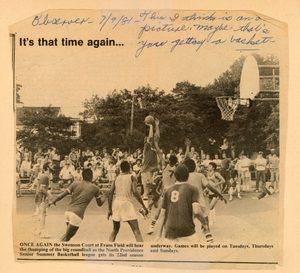
In 1962, ALI CABRAL and a group of teenage friends in a small Rhode Island town, propelled their neighborhood court into an NCAA-sanctioned league that, for over three decades, became a proving ground for dozens of NBA players, until racial tension from the surrounding neighborhood shut it down for good. Ali, along with the league’s long-time commissioner, TOM CANNON, now both in their 80s, are reconnecting with former players to reconcile what happened when the lights went out on their court.
Smoke Gets in Your Eyes
Directed by Asha Tamirisa
Produced by Sharlene Bamboat
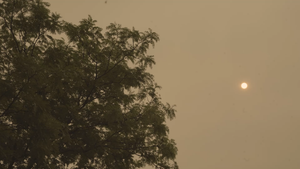
Smoke Gets in Your Eyes is an experimental documentary that drifts with wildfire smoke and the traces it leaves behind—on landscapes, bodies, memories, and ways of seeing. Combining first-person media diaries, expert interviews, experimental sound design, and analogue film processed with ecological materials, the film asks how nonfiction media can represent an atmospheric condition that exceeds the boundaries of the frame, the body, and visuality.
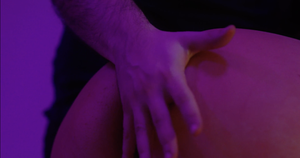
Spanking: An Ethnography!
Directed and Produced by Bianca Giaever and Ora DeKornfeld
Spanking: An Ethnography! follows two people who are obsessed with spanking. Blending verité with the community’s decades-deep archive, this film shows that spanking is not simply a fetish — it is a ritual, a conduit for growth and self-discovering, a source of belonging and, for some, even a way of life.
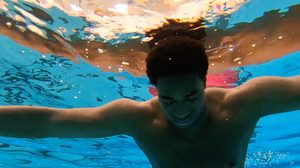
Survival Floating
Directed by Tracy Heather Strain
Produced by Tracy Heather Strain, Robin Hessman, Randall MacLowry, and Yvonne Welbon
Spurred by memories of witnessing a dramatic near-drowning at a suburban Black pool during 1970s-era segregation, award-winning director and swimmer Tracy Heather Strain investigates the myth that Black people don’t swim. SURVIVAL FLOATING weaves personal memory, history, and archival inquiry into a cinematic essay about how centuries of exclusion created today’s aquatic disparities—and reimagines water as a site of agency, joy, and liberation.
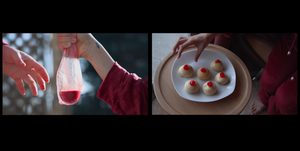
The Body is a Reliquary
Directed and Produced by v. nico d’entremont
“The Body is a Reliquary” is a first-person hybrid documentary exploring queer collective care, intergenerational legacies of gendered violence, and the evolution of community rituals designed to dispel embodied trauma. Alongside transgender and queer community members, as well as cis-gendered women in Catania, Sicily, the director co-creates and participates in practices centering the city’s patron saint, Sant’Agata. While Sant’Agata, who famously carries her own severed breasts on a platter, is widely regarded as a protector of rape and breast cancer survivors, this film explores the saint’s relevance to queer, trans, and other gender-marginalized communities in Sicily and throughout the Sicilian diaspora.
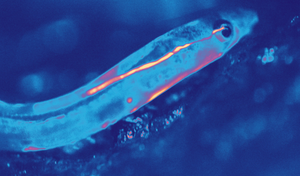
The Elversphere
Directed by Eli Kao
Produced by Michele Christle
The Elversphere dives into the remarkable lifecycle of wild eels, as well as their market-driven “migration” from Maine waters to Japanese plates, revealing unexpected multispecies relations and perspectives on current ecological and societal crises. Frontline voices from science, fisheries, and Native communities coexist with the “eel’s eye view” in this experiential journey, which also traces the filmmakers’ deepening connections with their environment.
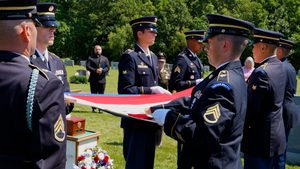
What Remains (working title)
Directed and Produced by Hyun kyung Kim
What Remains explores the haunting aftermath of the Korean War through the lives of the filmmaker’s late father, a Korean War veteran; her late mother, a refugee who lost her father during the war; an American soldier killed in the war. Through their writings, photographs, personal archival footage, news reels and newly filmed materials, What Remains reckons with the human cost of war and asks: why do we sacrifice so many lives for despots’ games of power?
EARLY DEVELOPMENT
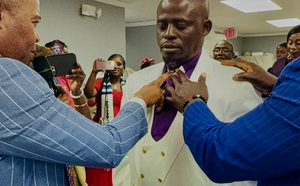
Darkness & the Light
Directed by Arthur Pratt
Produced by Banker White
A Sierra Leonean pastor, dramatist, and filmmaker seeking asylum in the United States uses the camera as both personal diary and pulpit, chronicling his precarious existence in immigration limbo through intimate testimony and sharp comedic satire. Blending intimate video diaries, comedic African street theater traditions, and cinematic sermons, Darkness & The Light confronts the moral contradictions of race, Christian faith, and American democracy.
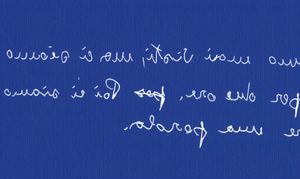
Elements of Graphology
Directed by Riccardo Giacconi
Produced by Fabrizio Polpettini
The film follows Danila, a graphologist in her early seventies who analyzes disputed handwriting for tribunals and lawyers from her small seaside apartment. Danila finds herself drawn into what appears to be a case of elder captivity and financial abuse, which she investigates almost entirely through phone calls and the close reading of handwriting samples. Part mystery, part portrait of a mother navigating solitude, memory, and the limits of what she can know and prove.
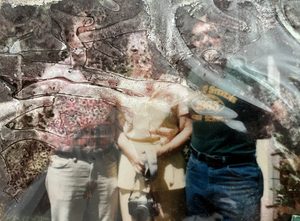
On Commitment
Directed and Produced by Sarah Kanouse
A feature-length essay film exploring what it means to dedicate one’s life to radical change, On Commitment interweaves interviews with elder activists in pacifist, land-based, and anti-nuclear movements with the filmmaker’s self-reflexive probing of the relationship between political and artistic commitment.
Rare Earthlings
Directed by Pedro de Filippis, Popó Tolentino
Produced by Bronte Stahl, Pedro de Fillipis, Thiago Carvalhaes
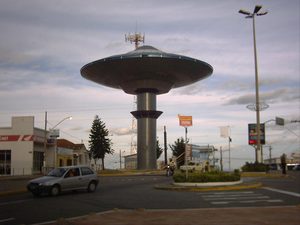
Thirty years after the Varginha UFO incident in Brazil, a forgotten alien faces a dilemma upon learning that his fellow extraterrestrials are returning to complete his original mission: to abduct Rare Earth Minerals. Rare Earthlings employs a performative and provocative approach to reframe a famous UFO narrative around the real invaders – the multinational mining companies.
Rootstock
Directed and Produced by Rebecca Richman Cohen
In 2017, WEED & WINE followed two farming families through a single growing season — the Jodreys, cannabis cultivators in Humboldt County, and the Thibons, biodynamic winemakers in the Southern Rhône. A decade later, ROOTSTOCK returns to find the world those families farmed has changed immensely. Weaving the original footage with scenes shot ten years later, ROOTSTOCK is a standalone film about labor, love, and staying rooted in a world coming apart.
At LEF’s August deadline for Pre-production and Early Development, 59 eligible applications were received from filmmakers working throughout New England. Three peer readers from the local filmmaking community who represent a diversity of perspectives on documentary were invited to review, discuss, and make recommendations on the applications. These peer evaluations informed LEF staff’s final grant decisions.
“What has always been compelling to LEF is the diverse and multilayered storytelling happening in New England,” said Lyda Kuth, LEF Executive Director, “from projects with a global reach, to those rooted in neighborhoods and communities close at hand. Drawing on the strength of their own unique perspectives, and with access to generous testimony from those they are portraying, the filmmakers who approach LEF for funding represent an exciting segment of what the region can offer the independent nonfiction ecosystem.
“The LEF Foundation truly cares about building a stronger community of New England filmmakers, a network of support that makes inventive, important work possible,” one grantee from this round shared.
This is the seventh year that the Moving Image Fund has included support at the Early Development stage, giving initial seed funding to filmmakers who have not yet had a chance to shoot or edit sample footage for their current projects.
All applicants who applied for LEF funding for either Pre-production or Early Development will have the option to receive review notes from staff to learn how their proposals were evaluated by the peer reviewers and to ask any questions.
“As a regional funder committed to channeling resources to individual artists, LEF continually hears from filmmakers about how catalytic this kind of early stage and locally-rooted grant funding can be for their work during such a crucial time of creative development and as they are just beginning to imagine and build their community of supporters for a new project,” said LEF Associate Director Genevieve Carmel. “We’ve also heard from filmmakers how meaningful it is to be able to learn from the peer review responses to their applications, which can be a constructive source of feedback on a project and a deeper resource for creative growth in their practice over time.”
“Before even receiving funding during this grant cycle, this project has grown tremendously thanks to the invaluable suggestions of LEF jurors in the previous grant cycle,” said one grantee.
In addition to this group of grantees, LEF will also award $270,000 to 14 projects in Production and Post-production later in the fiscal year, following the next January 2027 application deadline. In total, LEF plans to distribute $317,500 in funding to documentary productions over the course of its 2027 fiscal year.
The next Moving Image Fund grant deadline will be January 22, 2027 for New England-based directors and producers seeking Production support for feature-length documentaries. Prior grantees who are still eligible can apply for Post-production at the same deadline.
You can find more details regarding LEF Moving Image Fund guidelines and eligibility on our website.
You can subscribe to LEF’s mailing list to receive a monthly newsletter and the latest updates about grantee news, filmmaker opportunities, and calls for Moving Image Fund submissions. For more information on the Foundation or its funded projects, please contact Program Officer Matthew LaPaglia at matthew@lef-foundation.org.